

Vitamin C for Sensitive Stomach Made Simpler
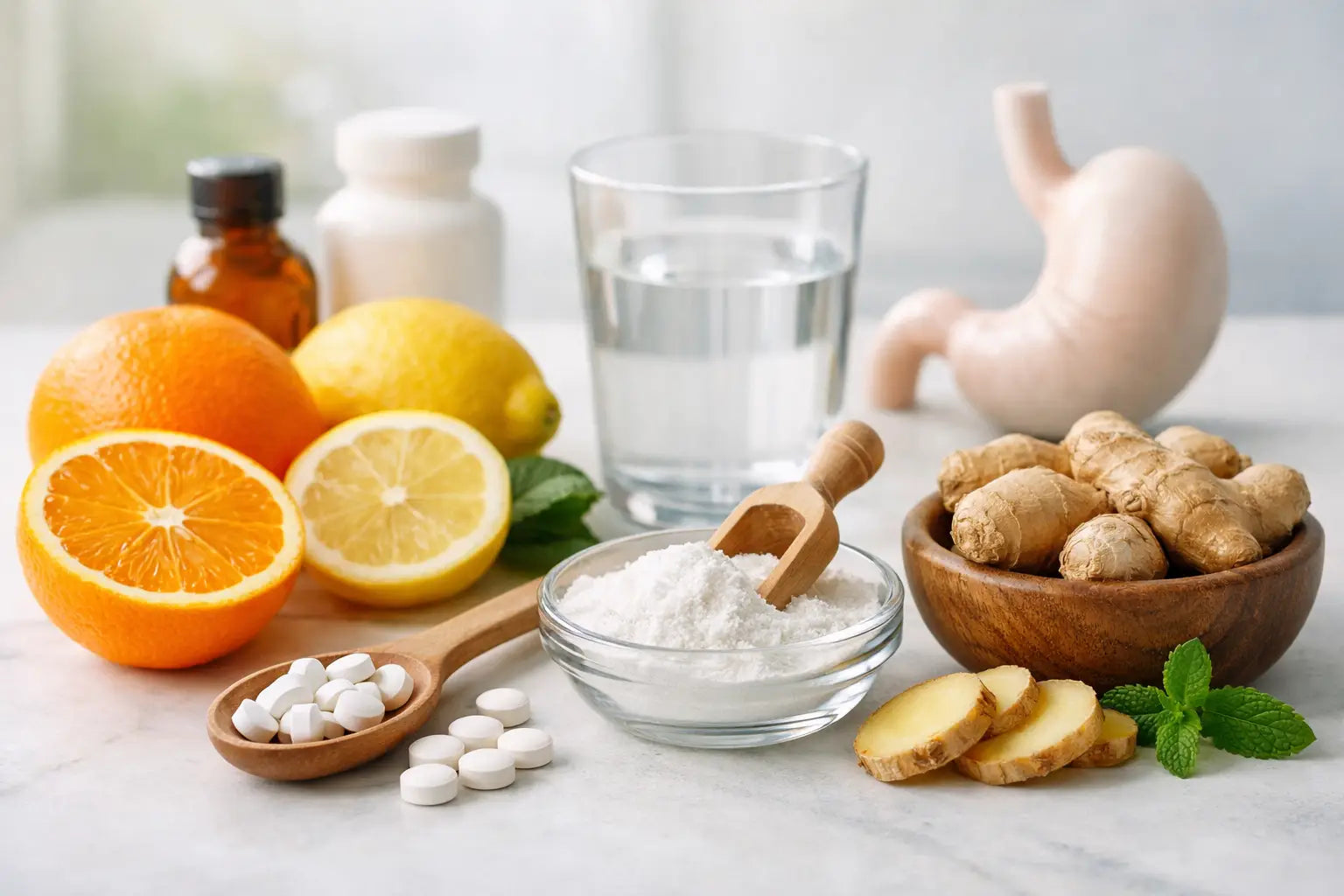
That familiar burning, nausea or cramping after a vitamin tablet can make a healthy habit feel like a bad bargain. Vitamin C for sensitive stomach concerns is not about avoiding this essential nutrient altogether. It is about choosing a form, dose and routine your body can comfortably live with.
Vitamin C supports normal immune function, collagen formation and antioxidant protection. Yet some conventional supplements can feel harsh, especially when they deliver a large dose of isolated ascorbic acid all at once. A gentler approach begins with understanding why that happens and what to look for instead.
Why vitamin C can upset a sensitive stomach
Most stomach discomfort associated with vitamin C comes down to acidity and amount. Ascorbic acid is naturally acidic. In food, vitamin C arrives alongside water, fibre and a broad mix of naturally occurring plant compounds, and it is consumed gradually as part of a meal. A concentrated tablet or powder, particularly on an empty stomach, is a different experience.
Higher doses can also draw water into the bowel. For some people, that means a loose stool, urgency, bloating or cramps. This does not necessarily mean vitamin C is unsuitable for you. It may simply mean the serving is more than your digestive system appreciates at one time.
Individual tolerance matters too. Reflux, gastritis, irritable bowel symptoms and recovery from a stomach illness can all make acidic supplements feel more noticeable. Flavoured fizzy powders, chewables and gummies may bring additional ingredients such as acids, sweeteners or sugar alcohols that do not suit every gut.
Vitamin C for sensitive stomach: gentler forms to consider
The label matters. Rather than assuming all vitamin C products work in the same way, look at the form of vitamin C, its source and the wider formulation.
Food-state vitamin C
Food-state vitamin C is cultivated from whole-food ingredients rather than presented only as an isolated synthetic nutrient. The aim is to provide vitamin C within a food-like structure, alongside naturally associated cofactors from vegetables and plants.
For people who prioritise digestive comfort, this can be a thoughtful place to start. A food-state formulation may feel more compatible with a whole-food routine than a high-strength isolated powder. It is not a guarantee that every sensitive stomach will react identically, but it respects the fact that nutrients are normally consumed as part of food, not in isolation.
Nu-Format’s approach is built around this principle: real-food-derived nutrition designed to be recognised and accepted more naturally by the body. When selecting any food-state product, still check the serving size and the full ingredients list. Gentle sourcing is most useful when it is paired with a sensible dose.
Buffered vitamin C
Buffered products combine vitamin C with a mineral, creating a less acidic form. Common examples include calcium ascorbate, magnesium ascorbate and sodium ascorbate. They can be a practical option for someone who finds plain ascorbic acid uncomfortable.
There is a trade-off. These forms contribute small amounts of their accompanying mineral, which may or may not suit your wider supplement plan. Sodium ascorbate, for instance, may not be the best fit if you have been advised to watch your sodium intake. If you take regular medication or have a health condition, ask a pharmacist or GP which option makes sense for you.
Lower-dose capsules or tablets
A modest dose is often the simplest solution. Many people begin with a product offering 100 to 250 mg per serving, taken with food, rather than jumping straight to a 1,000 mg tablet. Your body can only absorb so much at one time, so more is not automatically better.
Smaller servings also make it easier to adjust. If you tolerate one capsule with breakfast for a week, you can decide whether that level meets your needs before adding more. This is more useful than pushing through discomfort because a label suggests a higher number is superior.
Powders and liquids, used carefully
Powders and liquids allow flexible dosing, which can be helpful. However, many are still based on ascorbic acid and may be acidic. Mix them in plenty of water, take them with a meal and start with less than the full serving. Avoid sipping acidic drinks over long periods, as frequent acid exposure is not ideal for tooth enamel.
How to take vitamin C more comfortably
Timing can make a meaningful difference. Taking vitamin C with a proper meal, rather than coffee and a biscuit or an empty stomach, can reduce the sharp feeling some people experience. Breakfast or lunch is often easier than taking it late at night when reflux may be more likely.
Start low and stay there long enough to judge your response. Give a new product several days before changing the dose, provided you are not experiencing a significant reaction. If you need a larger total amount, dividing it between meals is generally kinder than taking it all at once.
Keep the rest of your routine in view. Iron supplements, certain B vitamins, probiotics and magnesium can each affect digestion in different ways. Starting several new products at the same time makes it difficult to identify what is helping or causing discomfort. Introduce one change, observe, then build gradually.
Hydration and food quality also count. A supplement is not meant to compensate for a diet consistently low in fruit and vegetables. Peppers, kiwi fruit, berries, citrus, broccoli and leafy greens offer vitamin C within real food, alongside fibre and a range of plant nutrients. If citrus triggers reflux, choose less acidic food sources such as peppers, broccoli or potatoes instead.
Ingredients that may be the real problem
If a vitamin C supplement makes your stomach unhappy, vitamin C itself may not be the only explanation. Look beyond the headline ingredient. Artificial colours, intense sweeteners, flavourings, caffeine, sugar alcohols and unnecessary fillers can be irritating for some people.
A short, transparent ingredient list is usually easier to assess. For anyone following a vegan, non-GMO or organic lifestyle, clear quality standards can offer additional reassurance. They do not replace individual tolerance, but they help you choose with more confidence and less guesswork.
Be especially cautious with mega-dose products marketed as an everyday necessity. Vitamin C is water-soluble, but that does not mean every high dose is comfortable or useful. Digestive upset is a common sign that your serving size needs reconsidering.
When to speak to a healthcare professional
Mild discomfort that settles after reducing the dose or taking your supplement with food is one thing. Persistent pain, vomiting, ongoing diarrhoea, black stools, unexplained weight loss or trouble swallowing needs proper medical attention, not a different supplement.
It is also wise to seek personalised advice before high-dose vitamin C if you have a history of kidney stones, kidney disease, iron overload conditions such as haemochromatosis, or if you are pregnant, breastfeeding or taking prescribed medicines. Vitamin C can affect iron absorption and may not be appropriate in every circumstance.
A calmer way to support everyday wellbeing
The best vitamin C routine is the one you can maintain without bracing yourself for side effects. Choose a food-first diet, favour a thoughtfully formulated supplement when it helps close a gap, and let comfort guide the dose.
A sensitive stomach is not a failure to tolerate wellness. It is useful feedback. Listen to it, choose nourishment that feels closer to real food, and give your body the steady, everyday support it can actually use.
